Size Guide For Wall Art: I Love It… But What Size Fits My Wall?
1. THE UNRESOLVED MOMENT
You've committed to the print. Now the size question.
XS, S, M, L, XL, XXL, XXXL — the options sit there, offering nothing useful.
You try to picture the wall. You try to remember if the sofa is two meters or two and a half.
You estimate, and you're not confident.
Here's the short version.
2. THE CONSTRAINT
The wrong size isn't just a visual disappointment — it's a commitment you have to undo.
Returning a print is a process. Ordering again takes time.
The constraint: most people don't have a tape measure when they're browsing.
And most mistakes are in one direction — too small.
3. THE APPROACH
Measure twice. Order once.
Before you choose a size, measure the wall space where the print will go — not the entire wall, but the specific zone: above the sofa, between two windows, on the staircase landing.
Write the dimensions down. Then choose a print that fills roughly 60–75% of that width.
Below 60% and the print looks lost. Above 75% and it starts to compete with the wall itself.
Height is secondary to width for most placements. Match the orientation to the wall's orientation — vertical for tall narrow spaces, horizontal for long low ones.
4. THE GUIDE
50×70 cm (portrait) — small corridors, reading nooks, above bedside tables. Not for main living walls.
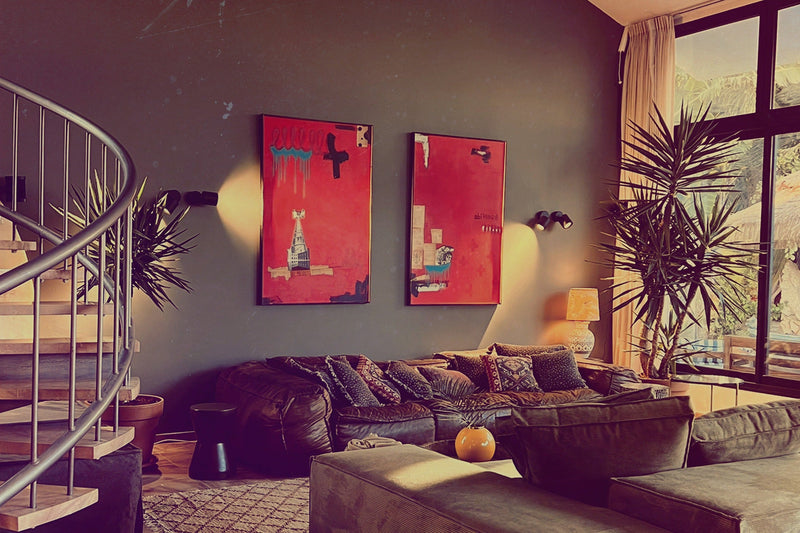
70×100 cm (portrait) — above sofas up to 180 cm wide. The default choice for living rooms.
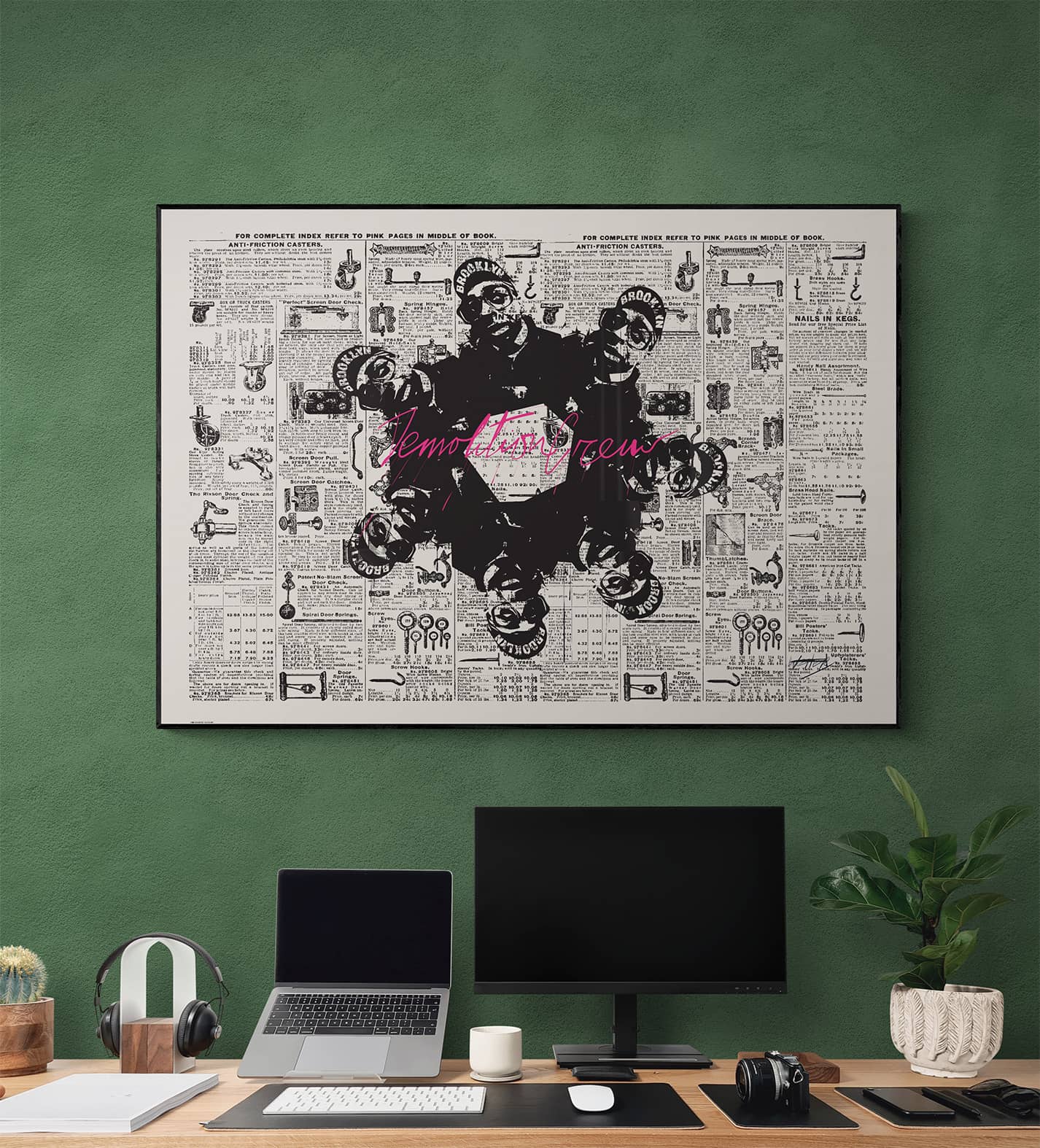
100×70 cm (landscape) — wide walls, long sideboards, above beds.
100×150 cm (portrait) — large living rooms, statement walls, high ceilings.
Gallery wall — if arranging multiple prints, start with the largest (at least 70×100) and build symmetrically around it. Keep uniform gaps of 5–8 cm.
5. REFLECTION
The right size feels obvious in retrospect.
It's the one where you stop seeing the wall and start seeing the room.
All prints available in multiple sizes. Limited to 100 editions each. yagilweiler.com