Transforming Tel Aviv’s Red House into GroundCover’s Artistic Headquarters
1. The unresolved moment
The building carried weight before anything was done to it.
Not visually — historically.
A presence that couldn’t be ignored, but also couldn’t dictate the future.
It was clear this wouldn’t be about filling a space with identity. The identity already existed — fragmented, layered, unresolved. The question wasn’t how to design it, but how to enter into conversation with it without flattening what made it charged in the first place.
This wasn’t a blank slate.
It was a structure with memory.
2. The constraint
The Red House is a very old building in Tel Aviv, taken on by GroundCover together with Painted Houses Ltd..
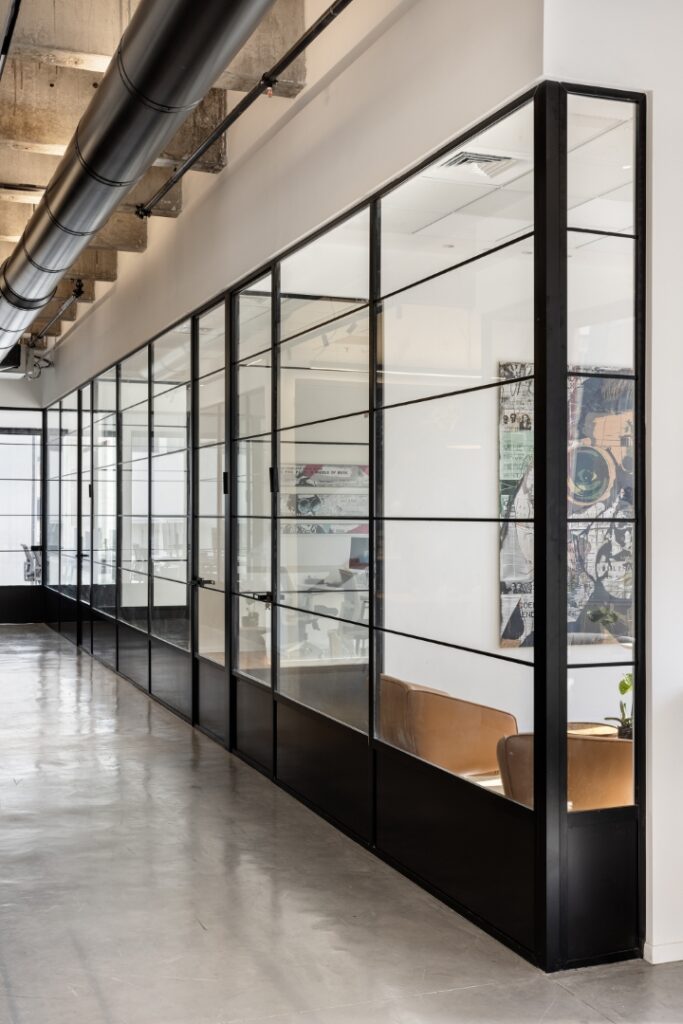
Four full floors were redesigned architecturally by Pninit Sharet Azulay — from the ground up.
The architectural language was already decisive.
The role of the art was not to decorate, soften, or brand the space — but to exist inside a completed architectural statement.
The art had to respond, not compete.
3. The decision
The entire project aligned around one decision:
Let the art adapt to the building — not the other way around.
Rather than placing finished works into finished rooms, the works themselves would be rethought, re-scaled, and re-cut — responding precisely to walls, passages, and vertical movement across all four floors.
No hero piece.
No central moment.
Continuity would come from distribution, not dominance.
4. The reasoning
The obvious alternative was to anchor the headquarters with a small number of statement works — recognizable, fixed, declarative.
That approach was dismissed.
This building didn’t need punctuation.
It needed rhythm.
By spreading original and adapted works across the entire structure — each one calibrated to its exact position — the art became part of the building’s circulation. Something you encounter, not confront. Something that moves with you rather than stopping you.
The art didn’t explain the space.
It followed it.
5. Reflection
Some collaborations begin with a brief.
Others begin with recognition.
When architecture is confident, art doesn’t need to raise its voice. It needs to listen well enough to know where it belongs — and where it doesn’t.
In this building, resolution didn’t come from a single moment of impact, but from accumulation. Floor by floor. Passage by passage.
That’s when the space stopped feeling designed — and started feeling inhabited.
Credits
Architecture & Interior Design: Pninit Sharet Azulay
Art: Y. Weiler / byWeiler
Photography: Itay Benit