Safe Packaging for Art Prints: What If the Courier Plays Football with My Parcel?
1. THE UNRESOLVED MOMENT
You ordered something you care about.
Now it's moving through a logistics network that doesn't know that.
The courier doesn't know it's art.
The warehouse doesn't know it's limited.
The van driver definitely doesn't know it's number 47 of 100.
This is what packaging is for.
2. THE CONSTRAINT
A print is deceptively fragile. Flat, light — easy to overlook how much can go wrong.
Bent corners. Pressure creases. Moisture. Impact.
None of these require dramatic mishandling. A box stacked at the wrong angle is enough.
The constraint: the packaging has to assume the worst without knowing what the journey looks like.
3. THE APPROACH
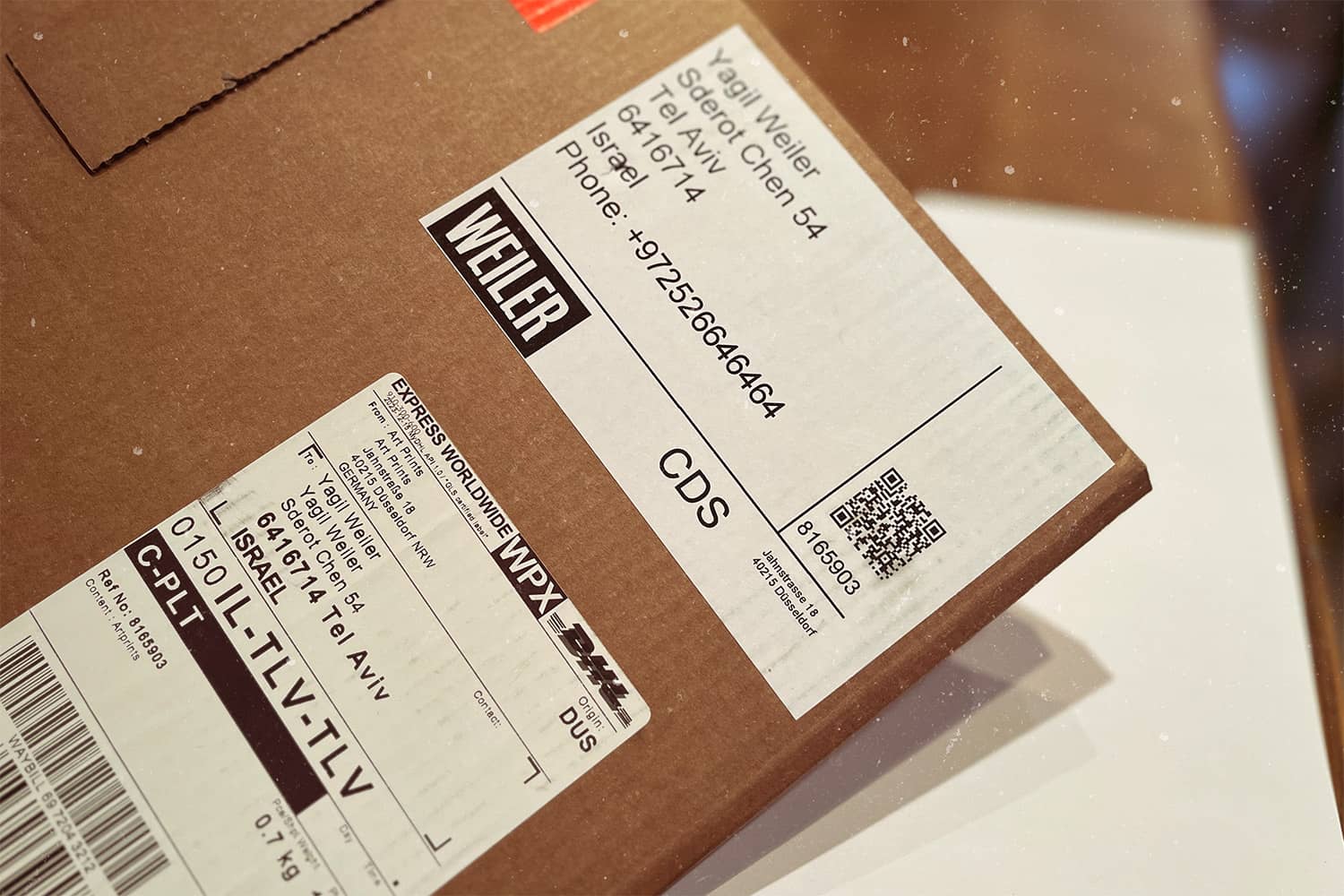
Every print ships flat in rigid board mailers — stiff enough to resist the weight of other parcels, sized to prevent the print from shifting inside.
Corner protection is built into the fit, not added as an afterthought. The print shouldn't move.
For larger formats, tube shipping is available. The print rolls around a core, not against it. The tube protects against compression, not just impact.
Outer packaging is plain. No branding that signals "expensive art object" to anyone handling it.
4. IF SOMETHING GOES WRONG
It rarely does. But the policy is simple: if a print arrives damaged, photograph it on arrival and contact within 48 hours. Replacement or refund — no argument.
This isn't generosity. It's what the edition limit requires.
Damaged prints don't restock. The replacement comes from the remaining edition.
5. REFLECTION
The packaging is the last thing you see before the print.
It should make you feel that what's inside was handled as if it mattered.
Because it does.
Worldwide shipping, flat-packed or tube. Limited to 100 editions each. yagilweiler.com